
Hurricane Shutters and Motorized Screens
Stop scrambling when storms approach and the mosquitoes arrive in Jacksonville & St. Augustine
Deploy protection in minutes. Reclaim your lanai's peace of mind.
Motorized Hurricane Protection
Storms Are Brutal on St. Augustine’s Patios and Lanais
Each year, like most Northeast Florida homeowners, you've watched too many tropical systems track across the Atlantic toward Jacksonville and St. Augustine.
With each shift of the spaghetti model toward Jacksonville, your fears turn into anxiety. Question after question arises. Lists are scribbled on paper, and tough choices are made. By then, you realize, it might be too late.
The line for plywood and generators at home improvement stores is a mile deep, and you drive past gas station after gas station with plastic bags hung over the nozzles Then the real fun begins. You return home. It's now time to play Tetris in your living room with patio furniture.
It does not have to be that way. That's why Jacksonville and St. Augustine homeowners are turning to MaxForce Motorized retractable screens for their lanais — blocking insects, heat, and sun with the touch of a button.
Motorized Insect protection
The Real Problem Isn’t the Storms. It’s the Bugs Too.
It starts with a single mosquito whining past your ear. Then another. Within moments, you're swatting at no-see-ums you can't even see, slapping at your ankles, and watching your guests do the same awkward dance.
It's the frustration that gets you. The embarrassment of hosting guests who can't stop scratching. The guilt of having an outdoor kitchen you never use. The defeat of surrendering your own backyard to creatures smaller than your fingernail.
You invested in outdoor living space to actually live in it. You shouldn't have to choose between being eaten alive or staying trapped inside. Your backyard should be a retreat—not a battlefield.
Neither problem should be this hard to solve.
All you need is a One-Track motorized screen.
Best Motorized Screen Companies in Jacksonville
We've Helped 1,500+ Families Just Like Yours
We're Titan Shutters and Screens, and we get it. We live here too. We've tracked the same storms, felt the same anxiety, and dealt with the same bugs ruining our outdoor spaces.
That's why we've dedicated ourselves to two solutions: hurricane shutters for when storms threaten, and motorized screens for when the insects arrive. That is our 365-day promise, so you can enjoy your patio or lanai year-round.
As a trusted hurricane protection company in St. Augustine and Northeast Florida, we've been protecting homes and transforming outdoor living spaces for years. It does not matter if you need a roll-down, Bahama, or Colonial shutter.
You shouldn't have to panic during hurricane season OR surrender your lanai to mosquitoes and blazing sun. You need someone who gets both problems. That is Titan...
Don’t wait for the next hurricane warning.
Our storm shutter installation across Jacksonville and St. Augustine is fast, code-compliant, and backed by professional permits. Peace of mind starts with one free assessment.
Here's your simple 3-step plan to reclaim your outdoor space
Step 1:
Free Assessment
We visit your Jacksonville or St. Augustine home, evaluate your storm protection needs and outdoor living spaces. Whether you need hurricane shutters, retractable screens, or both — we'll recommend what actually makes sense for your home and lifestyle.
Step 2:
Expert Installation
Our certified technicians install storm-rated hurricane shutters that deploy fast when needed, and motorized retractable screens that make your outdoor spaces usable again. Permits handled, code compliance guaranteed, quality installation that lasts.
Step 3:
Live Better Year-Round
Deploy shutters in minutes when storms approach. Use your screens daily to block bugs, sun, and heat—creating the outdoor room you've always wanted. You're protected when it matters AND comfortable every other day.
It's that simple. Assessment. Installation. Protection. Better living.
Here's What Happens if You Don't Get Protected
Without hurricane shutters, you're gambling with your home every single season. When the next storm threatens Northeast Florida, you'll be back in the same panic cycle. Scrambling for materials. Spending thousands on emergency measures that barely work. Risking shattered windows, water damage, and months of repairs.
Without motorized screens, you keep wasting the outdoor space you paid for. Your lanai stays too hot to use. Mosquitoes ruin evening dinners. You're stuck inside while your neighbors are relaxing on their screened patios. Another summer passes without enjoying what should be your favorite part of your home.
Don't let either problem continue.
Your home deserves protection that's ready before the storm forms.
No obligation. Just honest answers about protecting your family.
Here's What Success Looks Like
When Storms Threaten:
A tropical storm forms off the African coast. You check the forecast, but you're not panicking. You're prepared.
As it strengthens and tracks toward Florida, your neighbors are rushing to Home Depot. You're calm. Your hurricane protection is already installed.
When the cone shifts to include Jacksonville or St. Augustine, you simply press a button. Your roll-down shutters deploy smoothly. Or you slide your accordion shutters into place in minutes.
Your home is protected. Your family is safe. You can actually sleep at night.
When Summer Hits:
It's 7 PM on a Tuesday in July. Your neighbor is inside with the AC cranked because their patio is unbearable. You're on your screened lanai, enjoying dinner. The motorized screens blocked the afternoon sun, so it's comfortable. No bugs. Just a gentle breeze and your favorite outdoor space—finally usable.
This is what smart homeownership looks like.
This Is What Our Customers Experience:
Hurricane Shutters & Motorized Screens for Northeast Florida Homes
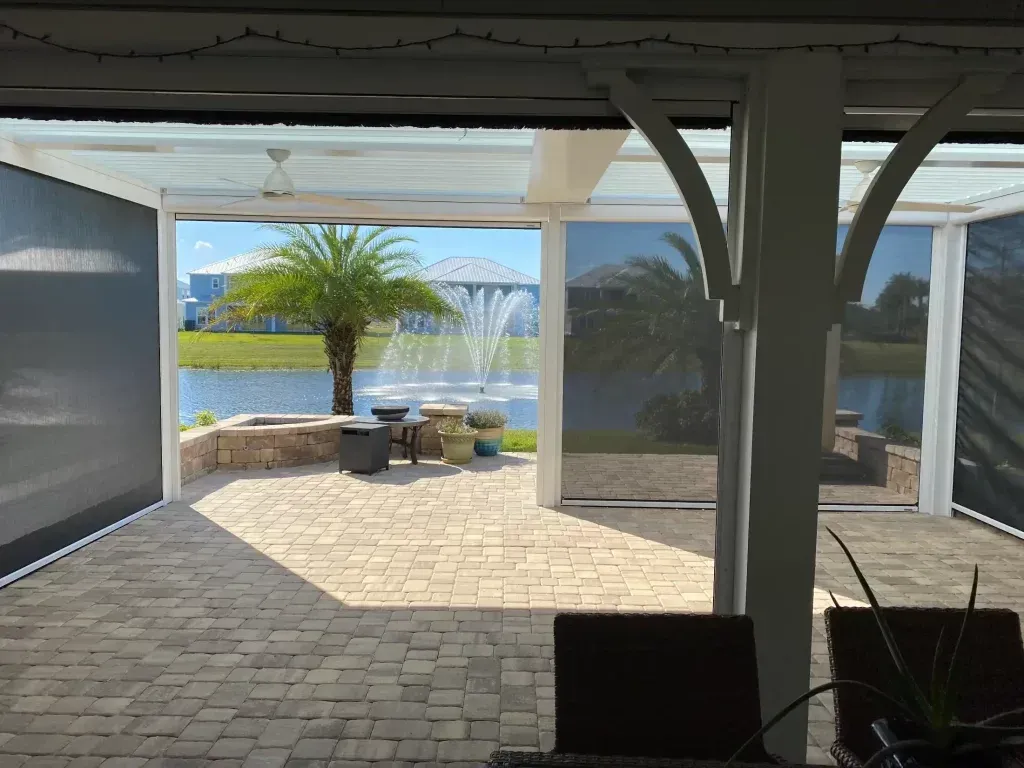
Hurricane Shutters Jacksonville
We install roll-down shutters Jacksonville homeowners rely on, along with accordion shutters and Bahama shutters — all engineered for Florida's toughest storms and fully code-compliant for Northeast Florida homes. These aren't decorative – they're storm-rated, wind-certified hurricane protection that deploys fast and lasts decades.
Perfect for: Coastal homes, waterfront properties, and any residence in hurricane-prone areas of Northeast Florida.
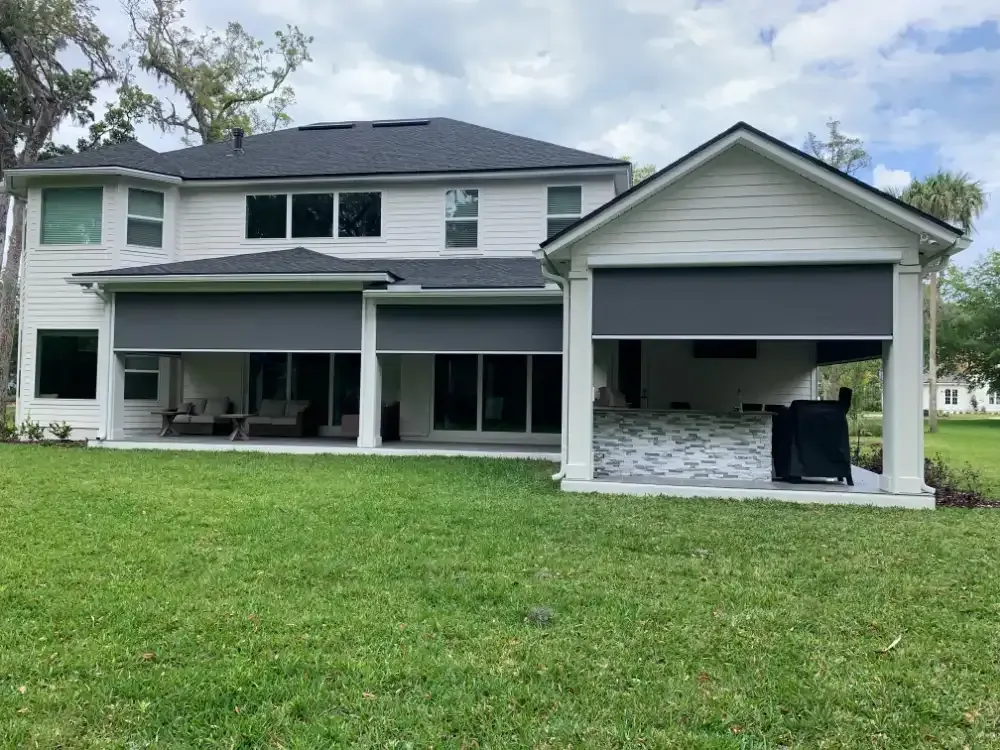
Motorized Retractable Screens St. Augustine, FL
Beyond storm protection, transform your outdoor living. Our motorized screens Jacksonville and St. Augustine homeowners love provide sun protection, wind blocking, and insect control with the touch of a button.
Perfect for: Lanais, patios, porches, and outdoor spaces you want to enjoy year-round – not just survive hurricane season.
It's that simple. Assessment. Installation. Protection.
You're One Decision Away from Never Fearing Hurricane Season Again
Right now, you have a choice:
Keep doing what you've been doing – stressing every hurricane season, scrambling when storms form, risking your home and family's safety.
Or take action today – get professional hurricane shutters and motorized retractable screens installed, and join the homeowners who sleep easy when the forecast shifts our way.
The difference between stress and peace of mind is one phone call.
Stop hoping your home survives the next storm.
Titan is the trusted hurricane protection company for Jacksonville, St. Augustine, and all of Northeast Florida. Professional installation. Proven protection. Total peace of mind.
Frequently Asked Questions
Do I need both hurricane shutters and motorized screens, or can I choose one?
It depends on what you're trying to solve. Hurricane shutters protect your home from storm damage and qualify you for insurance discounts in Florida. Motorized screens make your outdoor space usable day-to-day by blocking bugs, sun, and heat. They solve different problems.
Most coastal homeowners in Jacksonville, St. Augustine, and Northeast Florida start with shutters for storm season, then add screens later for daily comfort — but the right starting point depends on your priorities. If you're more worried about insurance and storm exposure, shutters come first. If your patio sits unused most of the year because of mosquitoes or heat, screens may matter more. We can walk you through both during a free assessment.
How fast can I deploy hurricane shutters when a storm is approaching?
Motorized roll-down shutters deploy in about 10 seconds per opening with a single button press. A typical Florida home can be fully secured in under 30 minutes — including the time it takes to walk through the house. Manual systems like accordion shutters or storm panels take longer, usually 30 to 60 minutes for the whole home depending on the number of openings.
The practical difference matters most when a storm shifts unexpectedly or strengthens close to landfall. Motorized systems remove the last-minute scramble; manual systems require planning ahead by a day or two. Either approach is faster and more reliable than plywood, which most insurance companies no longer recognize as approved storm protection.
Will motorized screens really keep bugs out and make my patio cooler?
Yes, in most cases. Quality retractable screens lock into an extruded aluminum track on all four sides, which creates a complete seal that mosquitoes, no-see-ums, and other insects can't bypass. The same mesh blocks up to 91% of UV rays and solar heat, which typically drops the temperature on a covered lanai or patio by 15 to 20°F during Florida summers.
Two caveats worth knowing: the bug-blocking depends on the mesh size you choose (no-see-um mesh is tighter than standard insect mesh), and the cooling effect is most noticeable on covered patios with shade. An open, sun-baked deck will feel cooler but won't reach the same temperature drop as a covered lanai. The system works best when paired with an existing roof or pergola. If you have questions about pergolas, visit our sister company, Titan Outdoor Solution.
Do hurricane shutters qualify me for insurance discounts?
In most cases, yes. Florida insurance companies typically offer 10–30% discounts on the wind portion of your premium when you install approved hurricane shutters — the exact amount depends on your insurer, your home's construction, and which openings are protected. To qualify, the shutters need to meet Florida Building Code requirements, and homes in High-Velocity Hurricane Zones (HVHZ) need products tested to Miami-Dade NOA standards.
Two things to confirm before counting on the discount: every opening that faces outward generally needs to be protected (partial coverage often doesn't qualify), and your insurance company will require engineering documentation and a wind mitigation inspection. Titan provides the documentation; an independent inspector files the wind mitigation report. Over time, the premium savings often cover the cost of the shutters themselves.
How long does installation take, and will you handle permits?
Most hurricane shutter installations take 1 to 3 days on-site, depending on the size of the home and the number of openings being protected. Motorized screen installations on a typical lanai usually take 1 day on-site. Before installation day, expect a lead time of roughly 3–6 weeks for hurricane shutters or screens, and up to 60–90 days for custom One-Track fabrication, depending on the product and current scheduling. Custom configurations, large homes, or projects involving electrical work for motorized systems can extend the timeline.
Titan handles permits and inspections for both shutters and screens across St. Augustine, Jacksonville, and Northeast Florida. That includes the building department paperwork, the engineering specifications submitted with the permit, and coordination of the inspection. Homeowners don't need to contact the building department directly. Code compliance is part of the install, not an add-on.
What do hurricane shutters cost in Florida?
Pricing varies widely based on the type of shutter, the number of openings, and the size of each opening. As of 2026, typical ranges in Northeast Florida look like this:
Storm panels (manual aluminum or steel): $7–$15 per square foot installed — the most affordable option, but requires storage and manual deployment before each storm
Accordion shutters: $20–$30 per square foot installed — permanently mounted, manually deployed, mid-range cost
Roll-down shutters (manual): $30–$45 per square foot installed
Motorized roll-down shutters: $45–$70 per square foot installed — fastest deployment, highest convenience, often qualify for the largest insurance discounts
A typical Florida home with 10–15 protected openings ranges from roughly $8,000 for storm panels to $35,000+ for fully motorized roll-downs. Insurance discounts of 10–30% on wind premiums often offset 30–50% of the cost over the life of the shutters. Free quotes are based on a walk-through of the actual home, since opening sizes and access conditions affect the final number.
TITAN NEWS
The storm-ready homeowner's guide for Northeast Florida.
Most Jacksonville and St. Augustine homeowners don't think about hurricane protection until the forecast shifts — and by then, the best decisions are already behind them. The same goes for outdoor living. A lanai that sits unused because of bugs, heat, and sun is money left on the table every single season.
Titan News covers both sides of the equation — the shutters worth installing, the screens that actually perform, the costs nobody talks about upfront, and the guides that help you make the right call before you need to. Everything in one place, written for homeowners in Northeast Florida.
You're One Decision Away from Never Fearing
Hurricane Season Again
Right now, you have a choice:
Keep doing what you've been doing – stressing every hurricane season, scrambling when storms form, risking your home and family's safety.
Or take action today – get professional hurricane shutters and motorized retractable screens installed, and join the homeowners who sleep easy when the forecast shifts our way.
The difference between stress and peace of mind is one phone call.


Copyright 2026. Titan Shutters and Screens. All Rights Reserved. Powered By Oculus Intel