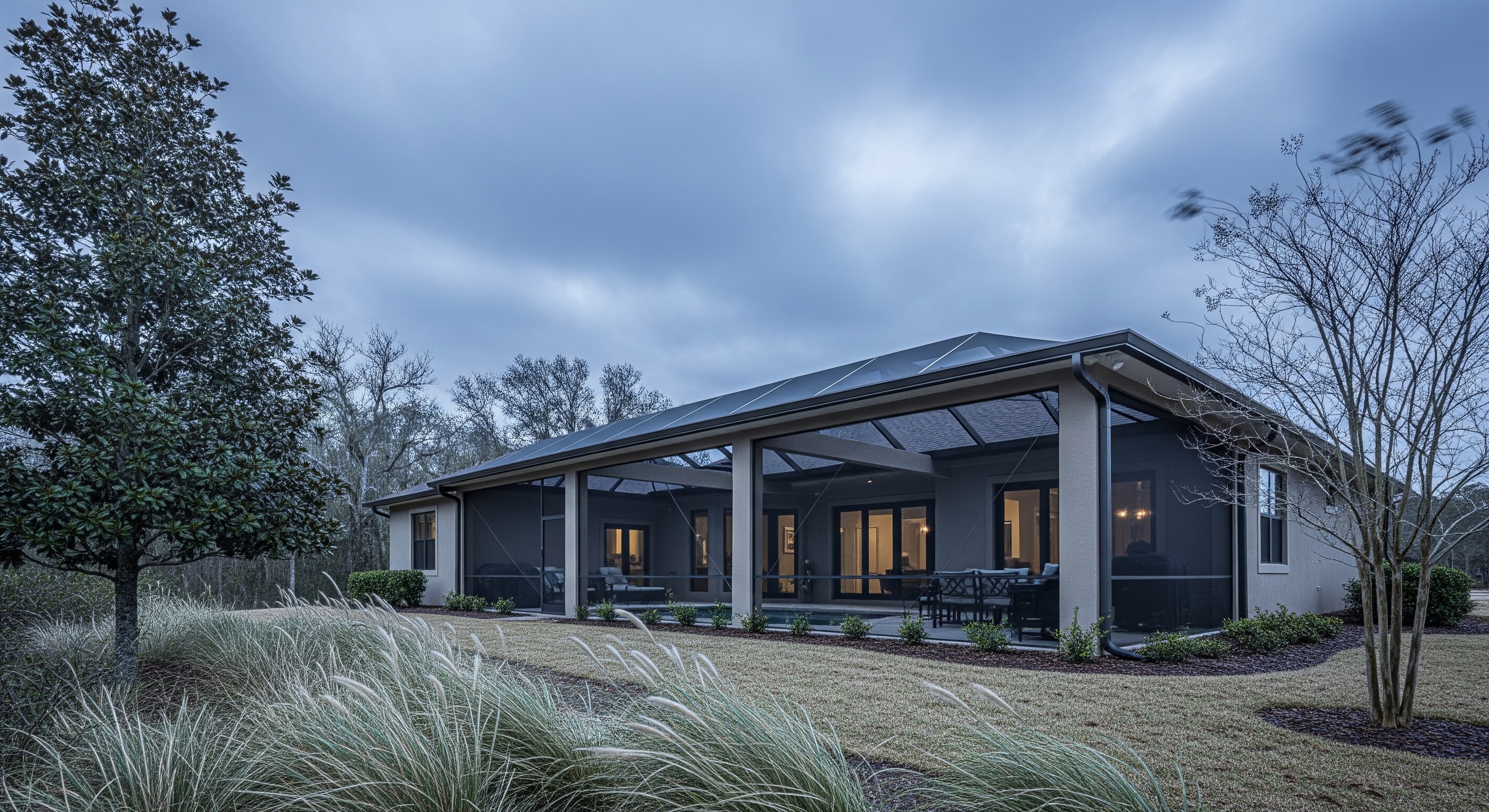
What "Winterizing" a Patio Structure Actually Means in Florida
What "Winterizing" a Patio Structure Actually Means in Florida
"Winterizing" carries a lot of baggage from other parts of the country: draining pipes, insulating against freezing temperatures, preparing for snow load on a roof. None of that applies here. Northeast Florida doesn't get snow, and freezing temperatures are rare and brief when they happen at all. So what does "winterizing" actually mean for a patio structure in this specific climate?
This is the third post inBuilt for Both Seasons, followingthe previous post comparing fixed covers, pergolas, and screened structures.
What actually threatens a structure in a Florida winter
A Northeast Florida winter is defined by cold fronts, not cold in the sense most people picture. These fronts bring sustained wind, often for hours at a stretch, along with rain that comes in at an angle rather than falling straight down. This matters structurally: a roof or cover designed to shed water falling vertically may do nothing to stop rain being pushed sideways into an open-sided patio. Wind load on a structure also behaves differently over hours of sustained pressure than it does during a twenty-minute summer thunderstorm, even if the peak wind speed is comparable.
Correcting the assumption most homeowners bring from elsewhere
Homeowners who moved to Florida from a colder climate sometimes carry over a mental checklist that doesn't apply here: draining outdoor faucets, wrapping pipes, clearing gutters ahead of snow load. None of that is the relevant task for a Northeast Florida patio structure. The relevant task is checking wind exposure at open edges, confirming any moving parts like louvers or retractable screens still operate smoothly after a summer of heat and humidity, and making sure fasteners and connection points haven't loosened. It's a different kind of maintenance than "winterizing" typically implies elsewhere, even though the underlying goal, being ready before the season's specific weather arrives, is the same idea.
Winterizing here isn't about the cold. It's about wind and water finding their way in sideways, from a structure that was only ever tested against rain falling straight down.
What a homeowner in an HOA community needs to know
If preparing a patio structure for this season means adding something new, a screen at an open edge, an upgraded fastener system, or a structural modification, homeowners in HOA communities like Nocatee or Ponte Vedra Beach should know their rights changed in 2024. Florida House Bill 293 prohibits an HOA from categorically denying a code-compliant structural modification related to storm or weather protection. The HOA can still weigh in on color and style through its standard architectural review process, but it cannot use that review to block the modification outright. This is the same law discussed in an earlier post in the MaxForce series regarding hurricane shutters specifically, and it applies just as directly to a structural change made for wind and rain protection on a patio.
One boundary worth stating plainly: this post describes the general threat profile of a Northeast Florida winter and the legal context for HOA modification rights. It does not provide a specific engineering checklist with pass or fail criteria for any individual structure, since that depends on the structure's actual construction, age, and installation, details this post can't evaluate for any one reader's specific patio.
Sources
Florida Senate. House Bill 293 (2024), Homeowners' Associations. flsenate.gov
