What "Hurricane Rated" Actually Means for a Northeast Florida Screen
What "Hurricane Rated" Actually Means for a Northeast Florida Screen
"Hurricane rated" gets used loosely in home improvement marketing, sometimes as a genuine engineering claim, sometimes as a phrase attached to a product that was never actually tested to any specific standard. For a homeowner comparing options, the difference matters, and it's worth understanding what the phrase is actually supposed to verify before treating it as a given.
This is the third post in The Back-to-Back Season, following the previous post on insurance and HOA mechanics.
What HVHZ testing actually requires
Florida's High Velocity Hurricane Zone designation applies specifically to Miami-Dade and Broward counties, where building code requirements are the strictest in the state due to historical storm exposure. Products seeking approval for use in this zone go through TAS 201 (large missile impact), TAS 202 (cyclic wind pressure loading), and TAS 203 (structural performance under load) testing. These protocols simulate conditions most of the state's building code doesn't test for at all: a 9-pound piece of lumber fired at the product at defined speeds, repeated pressure cycling meant to simulate sustained hurricane-force wind, and load testing to identify the point of structural failure.
Why a Miami-Dade tested product exceeds what Northeast Florida code requires
Northeast Florida, including St. Johns and Duval counties, falls outside the HVHZ boundary, so local building code does not require a product to pass TAS 201, 202, and 203 testing. A product that carries this certification anyway is meeting a stricter standard than the region legally requires, not just satisfying a minimum. For a homeowner comparing two screens where one is HVHZ tested and one isn't, the certified product has been through a verification process the other one simply hasn't, regardless of what either product's marketing claims about being "hurricane rated."
What OmegaTex fabric is and why the fiber choice matters mechanically
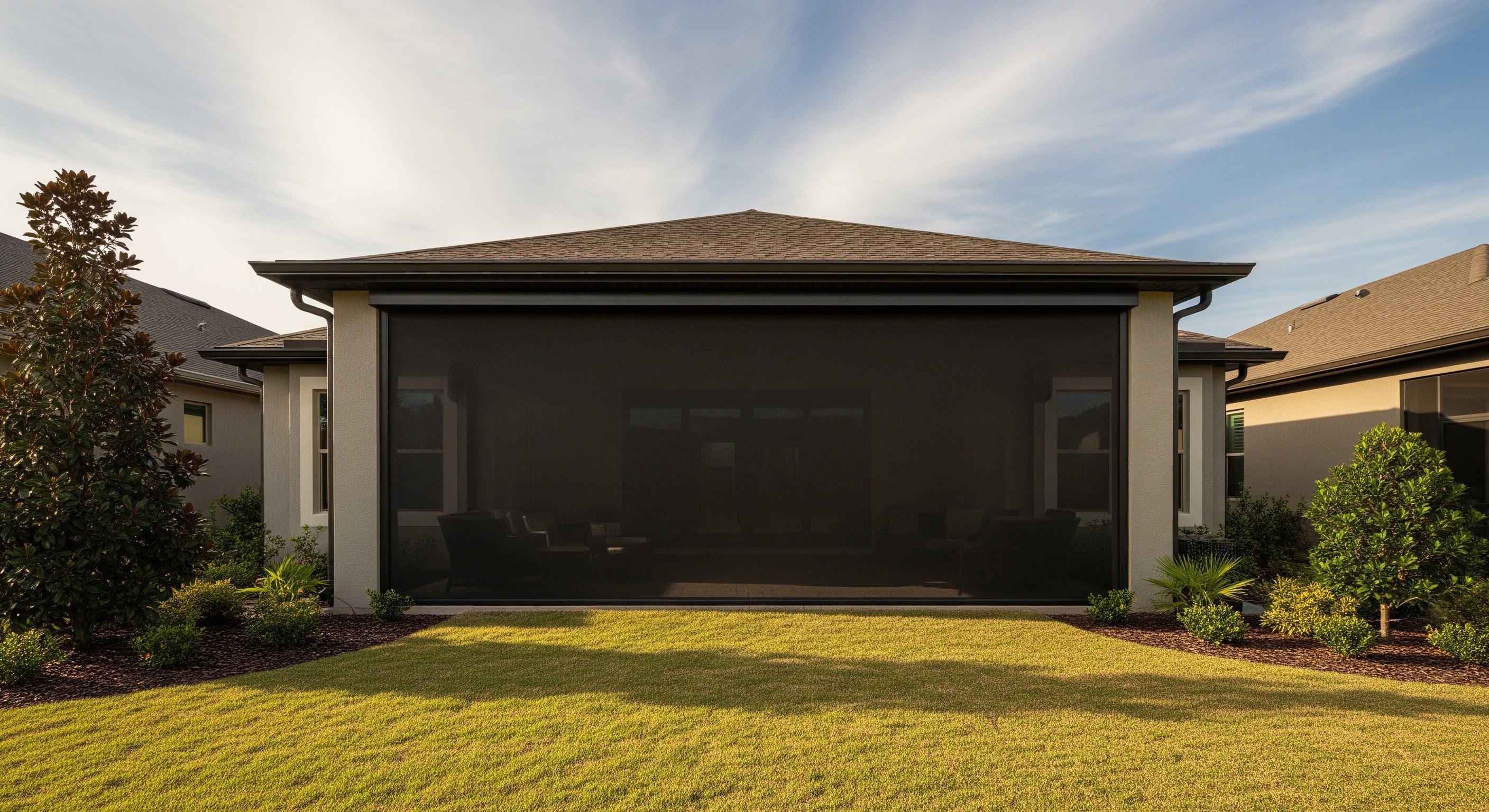
MaxForce Hurricane Track screens from Titan Shutters and Screens use OmegaTex fabric, built from aramid fiber, the same fiber family used in ballistic body armor. Aramid fiber is chosen for this application because of its tensile strength relative to its weight: it resists tearing and puncture under the kind of sustained, high-velocity impact a hurricane produces, while remaining flexible enough to retract into a compact housing when not deployed. This is a manufacturer specification from Fenetex, the company that produces the OmegaTex fabric and the MaxForce track system that Titan installs, not an in-house Titan formulation.
One thing worth stating directly here: this post describes the testing standard a genuinely hurricane rated product is verified against, and the fabric technology behind MaxForce specifically. It does not cite a specific Florida Product Approval number for this reason: that number has not yet been independently checked against the Florida Building Commission's public registry as of this post's publication, and until that check happens, this series isn't going to repeat a specific certification number that hasn't been confirmed current. If that verification closes before this post is edited again, the specific approval number can be added at that point.
Sources
TAS 201, 202, and 203 are standard testing protocols developed for Florida's High Velocity Hurricane Zone; they are referenced by name as an industry testing standard, not tied to a specific company's product approval filing in this post. OmegaTex fabric specifications are sourced from Fenetex, the manufacturer, as cited by Titan Shutters and Screens' product pages.
