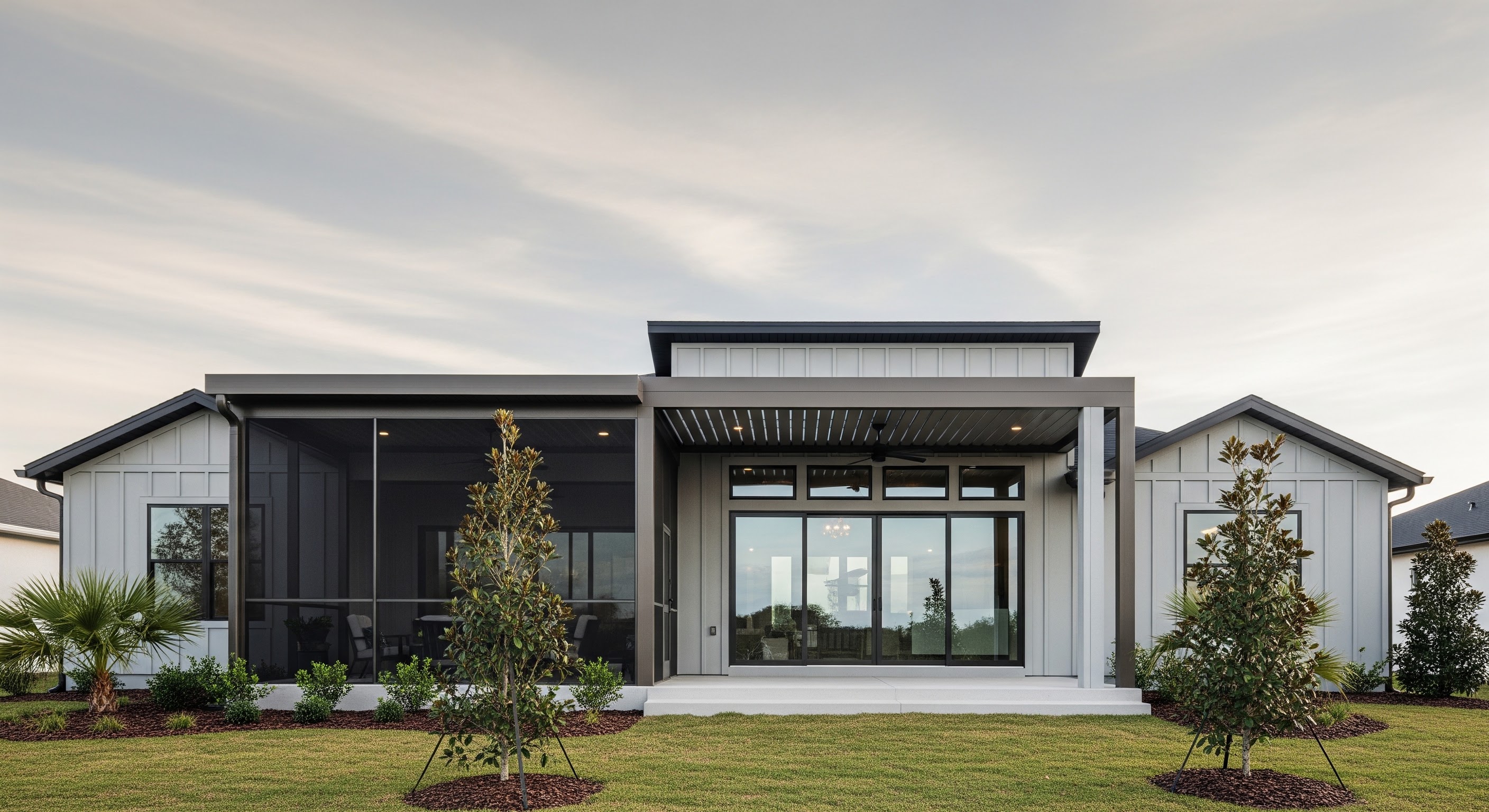
The Pre-Winter Checklist for Your Northeast Florida Patio Structure
The Pre-Winter Checklist for Your Northeast Florida Patio Structure
This series has covered a lot of ground: the mistake of choosing a structure for summer shade alone, what fixed covers, pergolas, and screens each actually handle, what winterizing really means here, why aluminum grade matters, how rain sensors work, when you need a screen alongside a cover, and what a project actually costs. This final post pulls that into something practical: an actual checklist to run through before Northeast Florida's cooler, windier months arrive.
This is the eighth and final post in Built for Both Seasons, following the previous post on project cost.
Quick Answer
What should I check on my patio cover or pergola before winter storms and cold rain arrive?
Before Northeast Florida's cooler, windier months, check four things: hardware and fasteners for looseness after a season of heat, drainage paths for debris buildup, any fabric or screen material for wear, and documentation on file for HOA approval or insurance wind-mitigation credit if either applies to your property. None of these require snow or freeze preparation, since this region's cooler-season risk is wind and driving rain, not cold.
Hardware and fastener check
A season of heat and humidity can loosen fasteners and connection points on any aluminum structure, whether it's a fixed cover, a pergola, or a screen track. As the structure comparison postandthe aluminum and coastal corrosion post both discussed, coastal salt air accelerates wear on metal and hardware, so a visual check of visible screws, bolts, and mounting points is worth doing before wind season arrives, not after something works loose during a storm.
Drainage check
Fixed covers and closed pergola louvers need a clear path for water to shed, and a summer's worth of leaves, pollen, and debris can block gutters or drainage channels on the structure. This matters more heading into the cooler season because, as the winterizing post explained, this region's cold fronts bring sustained, wind-driven rain rather than brief summer showers, meaning a blocked drainage path has more water to handle over a longer period than it would during a typical summer storm.
Fabric and screen inspection
If a retractable screen is part of your setup, check the fabric for wear, tears, or fraying at the edges after a summer of UV exposure and heat. If the system includes motorized louvers with rain-sensor automation, as the rain sensor post covered, confirm the sensor and motor are still responding correctly before you need them to work automatically during an actual storm. And if you're still deciding whether your patio needs a screen at all alongside its roof, the cover-and-screen post walks through how to tell which opening on your specific patio still needs addressing.
Documentation reminder: HOA and insurance
If you're in an HOA community and considering a structural modification for weather protection, the winterizing post covered your rights under Florida House Bill 293. Separately, if wind-mitigation insurance credits apply to any protective feature on your property, a companion post in Titan's MaxForce series, a worked example on hurricane screen insurance savings, walks through what that documentation and discount process can actually look like. Both are worth having in order before, not during, storm season.
None of this is complicated. It's four checks that take an afternoon, done before the season that actually tests them arrives instead of during it.
One boundary worth closing this series with: this checklist synthesizes the topics covered across the previous seven posts and doesn't introduce new claims of its own. Where earlier posts in this series relied on a disclosed, company-published cost range rather than independently audited pricing, that limitation still applies here too, this checklist doesn't upgrade or resolve that open question, it simply points back to where the fuller discussion lives.
Sources
This post synthesizes claims already sourced in earlier posts in this series and one companion post in Titan's MaxForce series; no new external sources are introduced here. See the linked posts above for the original sourcing behind each point.
