MaxForce vs. Standard Retractable Screens: What the Track and Fabric Actually Change
MaxForce vs. Standard Retractable Screens: What the Track and Fabric Actually Change
A standard retractable screen and a hurricane-rated one can look nearly identical rolled up in their housing. The differences that actually matter are in the track mechanism and the fabric itself, not in anything visible from a quick glance. This post breaks down what specifically changes between a standard system and MaxForce, Titan's hurricane-rated line.
This is the fourth post in The Back-to-Back Season, following the previous post on what "hurricane rated" actually means. It also connects to a post in Titan's other series, Built for Both Seasons, on whether a patio needs a screen alongside a cover, since the span and configuration details discussed below apply directly to that decision too.
The track and retention mechanism
A retractable screen's track does more than guide the fabric up and down, it's what keeps the fabric anchored under wind load. A standard screen's track is generally built for everyday wind conditions and casual use, not for sustained hurricane-force pressure. MaxForce uses a reinforced track system designed specifically to keep the fabric retained under the kind of sustained wind load tested in the TAS 201, 202, and 203 protocols discussed in the previous post. This is the mechanical difference that actually determines whether a screen holds its position during a storm or fails at the track under pressure.
Fabric composition
Standard retractable screens typically use lighter synthetic mesh fabrics, chosen for everyday bug and sun protection at a lower cost. MaxForce uses OmegaTex fabric, built from aramid fiber, the same fiber family used in ballistic body armor, a Fenetex manufacturer specification. Aramid fiber's tensile strength relative to its weight is what allows the fabric to resist tearing and puncture under high-velocity impact while still retracting into a compact housing. This is a materially different fabric, not the same weave marketed under a different name.
Span and configuration limits
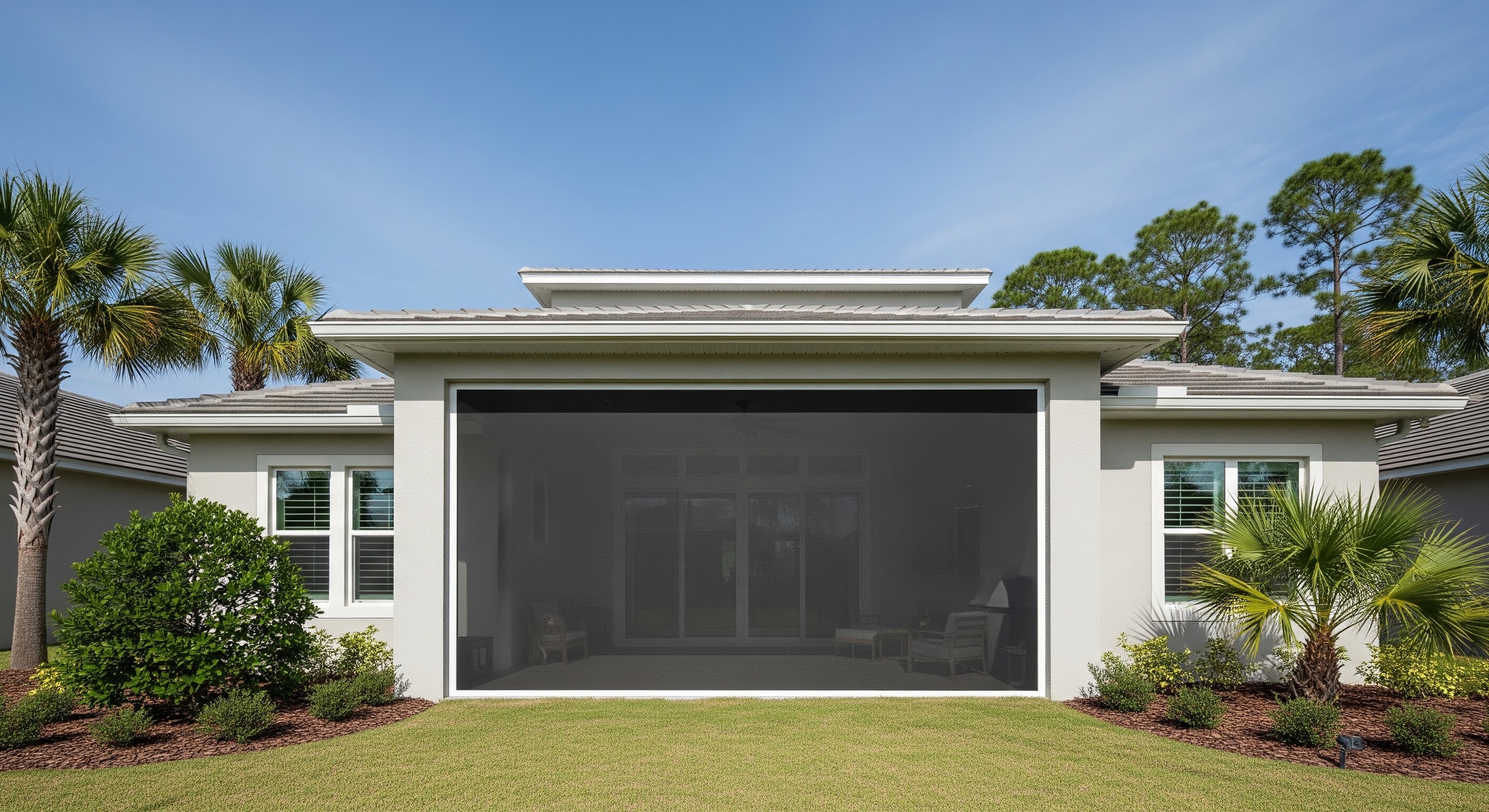
Both Titan's One-Track and MaxForce systems handle single-span openings up to 25 feet, with L, U, or wraparound configurations available for larger or irregularly shaped openings, per manufacturer specification. This span capacity is the same across both product lines, the difference between them is in what happens to the fabric and track once wind actually applies force, not in how large an opening either system can physically cover. For a homeowner deciding what fits their patio's layout, span and configuration are a separate question from which product line to choose, both handle the same range of openings.
Two screens can cover the same 25-foot opening and look identical closed. Only one of them was engineered to still be there after the wind actually arrives.
One boundary worth stating clearly: this comparison describes the general mechanical and material differences between standard and hurricane-rated screen systems, based on manufacturer specifications. It does not cite Titan's specific Florida Product Approval number for MaxForce, consistent with the previous post in this series, since that number has not yet been independently verified against the Florida Building Commission's public registry as of this post's publication.
Sources
Fabric composition, track specifications, and span/configuration capacity are Fenetex manufacturer specifications, cited by Titan Shutters and Screens' product pages.
