Hurricane Screens St. Augustine & Jacksonville, FL
Hurricane Screens for First Coast Homes: A Coastal Guide for St. Augustine, Jacksonville & Palm Coast
Quick Answer: Homes along Northeast Florida's First Coast face two things inland properties don't — direct Atlantic storm exposure and constant salt air. Motorized hurricane screens built with marine-grade, corrosion-resistant components handle both: they seal an oceanfront or intracoastal patio against storm wind and driven rain, then retract for everyday coastal living. Titan Shutters and Screens installs MaxForce Hurricane Screens — engineered for winds up to 185 mph — for homeowners from Palm Coast through St. Augustine to Jacksonville.
What the First Coast Asks of a Home
Living on Northeast Florida's coast is its own kind of beautiful, and its own kind of demanding. The ocean that makes Ponte Vedra and Vilano Beach worth the price is the same ocean that sends storms ashore first. When a hurricane tracks up the Atlantic, the First Coast doesn't get the weakened, inland version — it gets the front edge: sustained wind off the water, horizontal rain, and the surge and flooding that have tested St. Augustine more than once in recent memory.
And even between storms, the coast never really lets up. Salt air is relentless. It works on metal year-round, finding every unprotected fastener and finish. Any system you put on a beachside or intracoastal home has to survive not just one bad weekend in September, but a decade of salt.
That combination — direct storm exposure plus constant corrosion — is what separates a coastal hurricane decision from an inland one. It's also why what works ten miles from the water isn't automatically the right answer on it.
Shutters, Screens, or Both?
At Titan, we install both hurricane shutters and motorized screens — which means we have no reason to push you toward one when the other fits better. Here's the honest breakdown for a coastal home.
Shutters and panels are proven, strong, and the right call for many windows and doors. Their limitation is the same on the coast as anywhere: once they're closed, the space is closed. For a window, fine. For the oceanfront porch or intracoastal lanai you bought the house for, sealing it away most of the year is a poor trade.
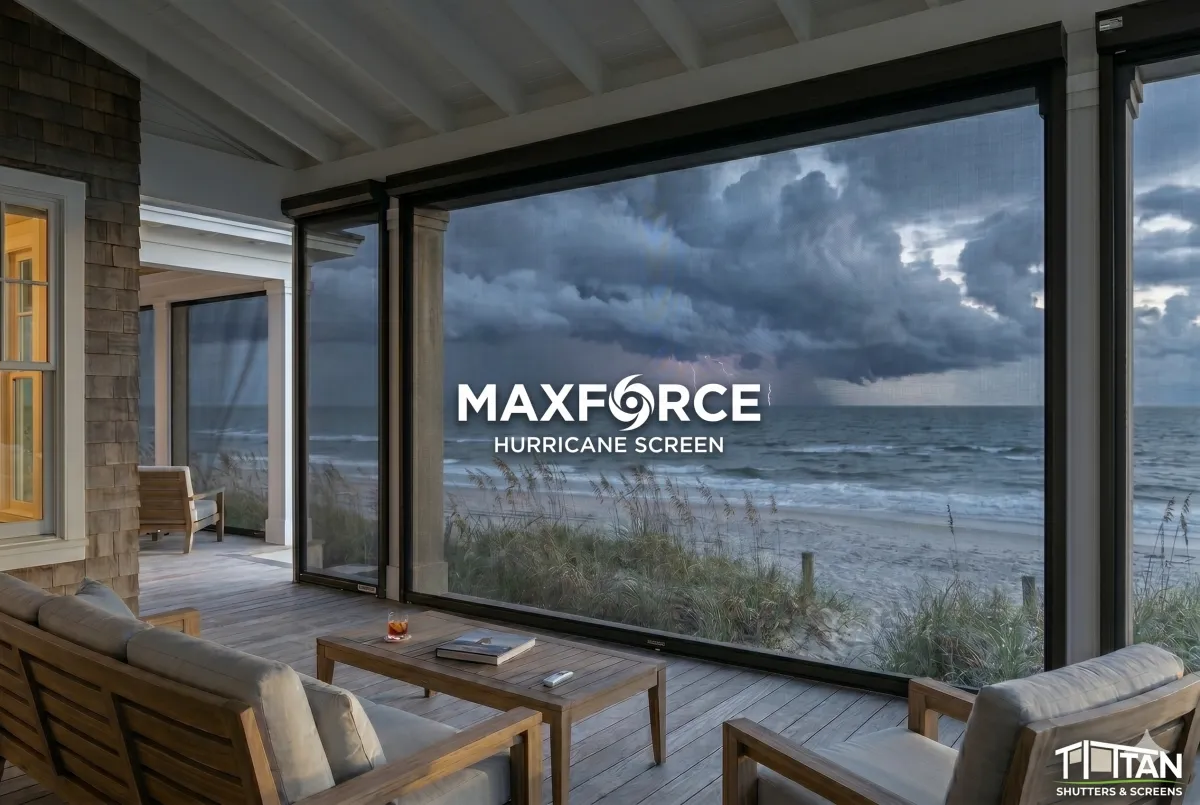
Motorized hurricane screens suit coastal outdoor living because they do double duty. They roll down to a storm barrier in seconds when a system threatens, then disappear into a slim housing the rest of the year — so the view, the breeze, and the open-air living you came to the coast for stay intact, with shade and salt-spray-and-insect control added on ordinary days.
For many First Coast homes, the right answer is both — shutters protecting the glazed openings, motorized screens protecting and enclosing the outdoor living space. A local installer should help you sort out which goes where.
Why the Build Matters More on the Coast
This is where coastal differs from inland in a way that's easy to miss until it's too late. A screen system on the beach operates in a saline environment, and the materials must be chosen accordingly.
The MaxForce system we install is built around marine-grade, powder-coated aluminum and corrosion-resistant components — engineered to hold their finish and strength in the exact salt-air conditions the First Coast throws at them. On the storm side, MaxForce is built to meet the engineering standards for Miami-Dade County, the most demanding hurricane code in the country, and engineered for High-Velocity Hurricane Zone use at winds up to 185 mph. It's made in the United States by Fenetex, a Florida manufacturer in business since 2007, and the newest generation runs on a self-adjusting spring track that lies nearly flat, stays quiet, and blocks up to 95% of UV for everyday use.
If you want the full engineering story — how the screen is built to stay locked in its track when a coastal storm loads it up — MaxForce lays it out here: how MaxForce is engineered to hold. You can also see the product and its certifications at MaxForce Hurricane Screens.
What Coastal Installation Involves
A hurricane-rated installation on the First Coast must meet the Florida Building Code, and the permit must be pulled by a credentialed contractor — that part is the same, whether on the coast or inland. What changes on the coast is the attention to detail: substrate condition near salt exposure, proper fastening into the right structure, and a finish system chosen to last by the water.
That's the work Titan Shutters and Screens does every day, from Palm Coast up through St. Augustine to Jacksonville and the Beaches. We measure, design to your exact openings, handle permitting, and install to code — one local team accountable from first measurement to final test, on homes built for this coast.
Talk to Your First Coast Hurricane Screen Dealer
If you're protecting an oceanfront, beachside, or intracoastal home anywhere from Palm Coast to Jacksonville, start with a conversation. We'll look at your openings, tell you straight where the shutters and screens fit, and give you real numbers.
See the system we install on our MaxForce hurricane screen page, or reach us at 904-822-1303, or schedule a free 20-Minute Phone consultation.
Frequently Asked Questions
Do coastal Northeast Florida homes need stronger hurricane protection than inland ones? Coastal First Coast homes face the front edge of Atlantic storms — sustained wind off the water and driven rain — plus constant salt air that corrodes unprotected materials. Both factors make material quality and a code-compliant install especially important near the coast.
Will salt air corrode a motorized hurricane screen? A screen built for the coast shouldn't. The Titan system, manufactured by Fenetex motorized screens, uses marine-grade, powder-coated aluminum and corrosion-resistant components designed to withstand salt-air conditions over the long term.
Should I get hurricane shutters or motorized screens for a coastal home? Often both. Shutters suit glazed windows and doors; motorized screens suit outdoor living spaces like porches, lanais, and intracoastal patios because they protect during storms and retract for everyday use. Titan installs both and can advise which fits where.
How strong are MaxForce screens? MaxForce Hurricane Screens are built to meet Miami-Dade County engineering standards and engineered for High-Velocity Hurricane Zone use at winds up to 185 mph. Hurricane installations must be permitted and installed in accordance with the Florida Building Code by a credentialed dealer.
What areas does Titan Shutters and Screens serve? Titan serves Northeast Florida's First Coast, from Palm Coast through St. Augustine to Jacksonville and the surrounding communities. Contact us to confirm service at your address.
Titan Shutters and Screens — your First Coast hurricane shutter and motorized screen specialist, St. Augustine, FL.
