Is a Hurricane Screen Something You'd Actually Use Every Day, or Only During a Storm?
Is a Hurricane Screen Something You'd Actually Use Every Day, or Only During a Storm?
A hurricane-rated screen tends to get talked about entirely in storm terms, wind ratings, impact testing, certification standards. What often gets skipped is a more basic question: is this something that sits closed in a garage until a named storm shows up, or does it actually fit into daily life?
This is the sixth post in The Back-to-Back Season, following the previous post on regional UV exposure risk.
Deployment as everyday functionality
Motorized retractable screens, including MaxForce, are operated through a remote, wall switch, or in some systems a smartphone app, and deployment is a button-activated action rather than a manual process. One thing worth being direct about: Titan's own marketing describes deployment as fast, but no independently timed measurement of an actual MaxForce or One-Track deployment exists in this article's sourcing, and this post isn't going to state a specific number, ten seconds or otherwise, without one. What can be said accurately is that the system is motorized and button-activated, not a manual crank or a multi-step process, which is a meaningfully different everyday experience than deploying a traditional hurricane shutter by hand.
Routine use cases versus storm-only use
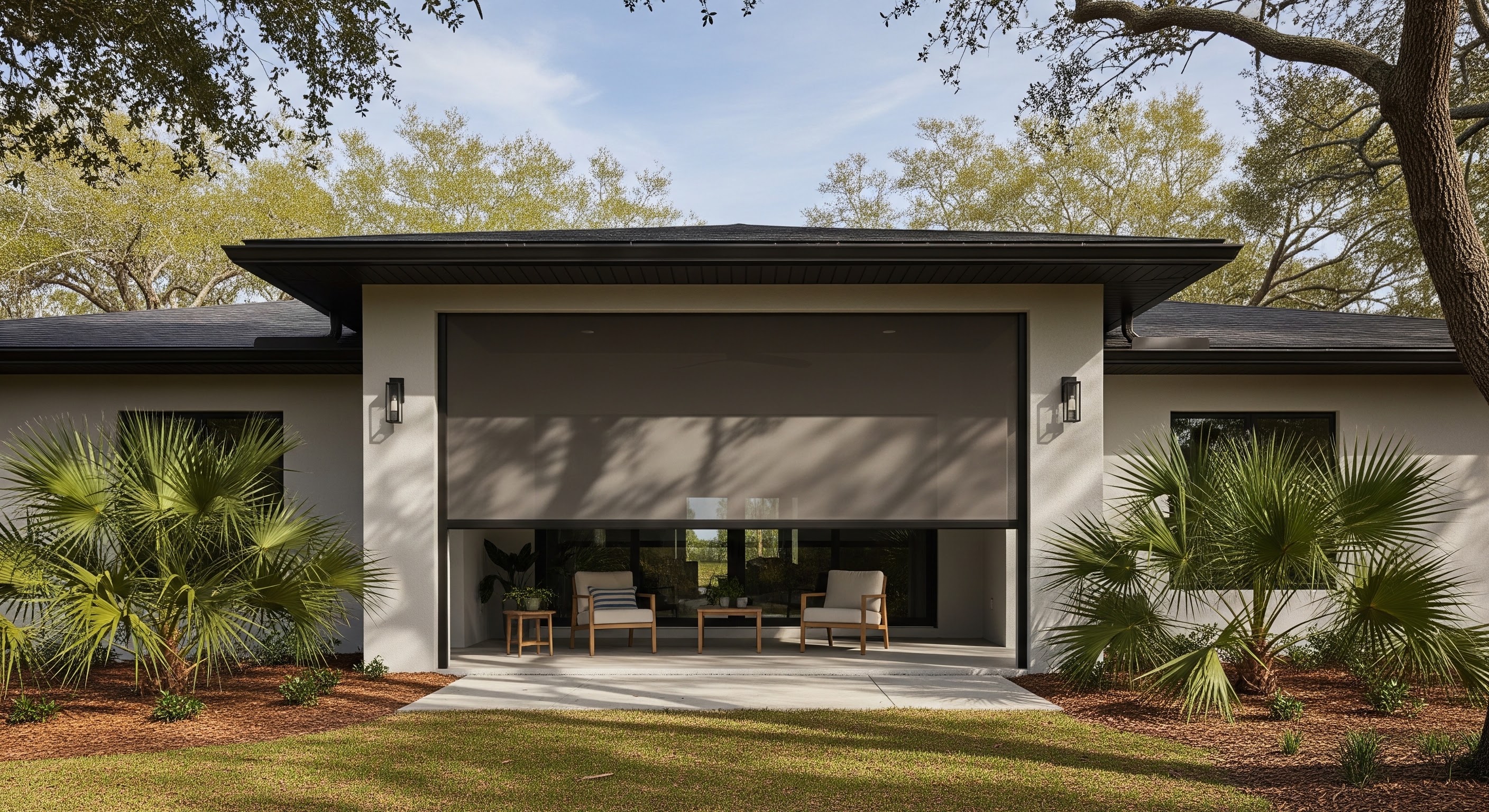
Because the screen is motorized and simple to operate, homeowners can reasonably use it for routine purposes unrelated to storm prep: blocking afternoon sun on a covered patio, keeping insects out during an evening outdoors, or reducing glare on a television or workspace near a large opening. None of this requires a named storm, it's ordinary comfort management that happens to run through the same hardware built for hurricane-force wind. This is the practical answer to whether the product sits idle most of the year, for a household that actually uses its outdoor space, it doesn't have to.
A hurricane-rated screen only earning its keep once a year is a reasonable assumption. It's also usually wrong, the same button that closes it before a storm closes it before a sunny afternoon too.
Manual override and maintenance
Motorized systems generally include a manual override in case of power loss, an important consideration given that hurricane conditions are exactly when power interruption becomes more likely. Beyond that, routine maintenance for a system used daily rather than annually is a fair question homeowners should ask directly when comparing options, since a component cycled frequently faces different wear patterns than one used once a year. This article doesn't have independently verified maintenance-interval data to cite here, and states that gap rather than guessing at a schedule.
One boundary worth stating plainly: this post describes the general functionality and use pattern of motorized hurricane screens based on how these systems are built and marketed. It does not include an independently timed deployment measurement or a verified maintenance-interval figure, both real gaps in the available evidence for this specific topic, addressed honestly here rather than filled in with an invented number.
Sources
This post describes motorized screen functionality as generally built and marketed in the industry. No independently timed deployment measurement or maintenance-interval study is cited, since none currently exists in this engagement's evidence base.
