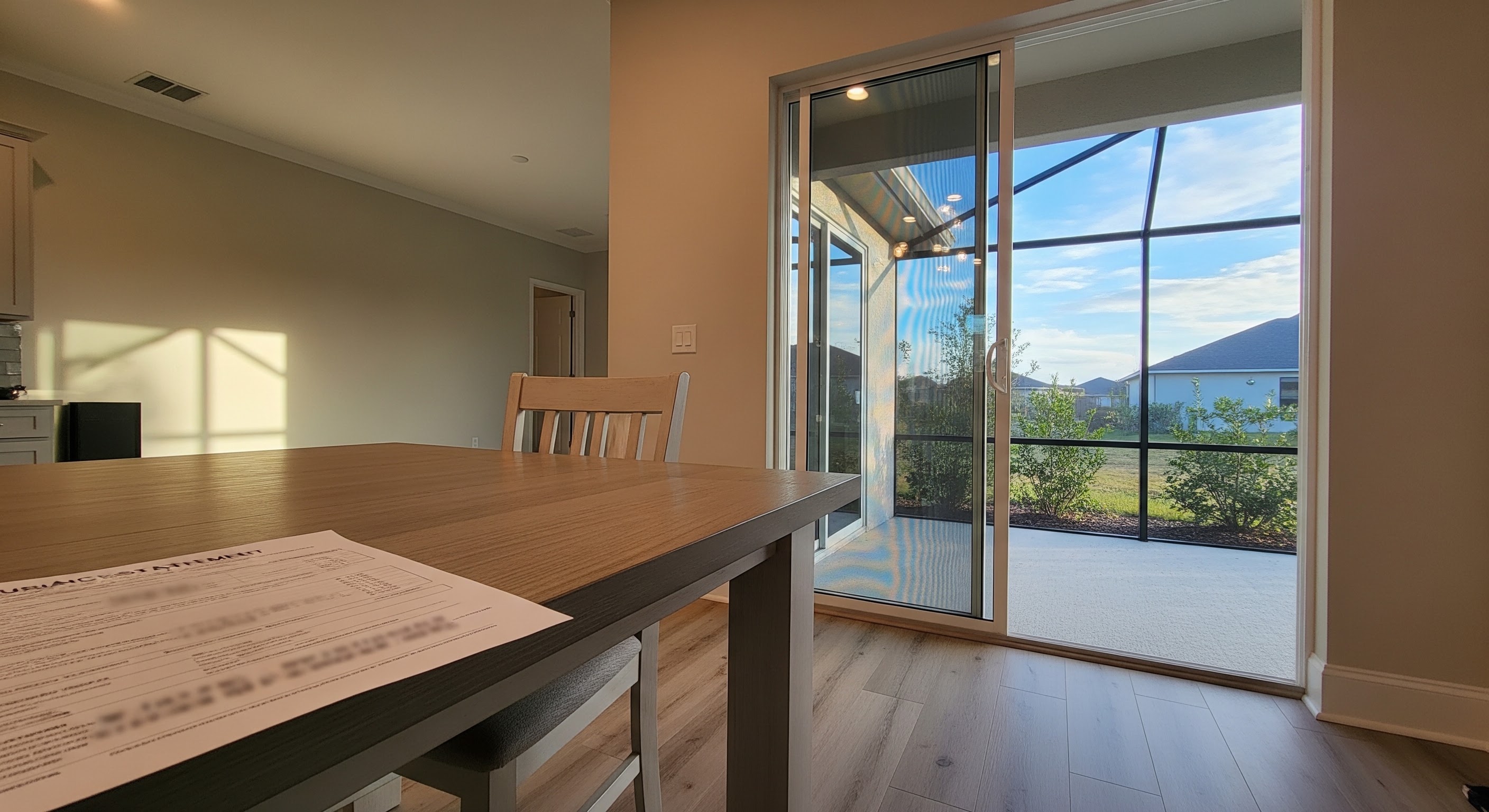
How Much Could a Hurricane-Rated Screen Actually Save You on Insurance? A Worked Example
How Much Could a Hurricane-Rated Screen Actually Save You on Insurance? A Worked Example
An earlier post in this series explained that Florida law requires insurers to offer a wind-mitigation discount for certified hurricane protection. That's the legal mechanism. This post walks through what that mechanism actually looks like applied to a real premium range, so the abstract requirement turns into a concrete picture of how the math works.
This is the seventh post in The Back-to-Back Season, following the previous post on everyday screen usability. It builds directly on an earlier post explaining the underlying insurance and HOA law.
How the discount mechanism works, step by step
The process starts with a wind-mitigation inspection, typically performed by a licensed inspector, who documents which wind-resistive features are present on the home, including verified hurricane protection on openings. That inspection report is submitted to the insurance carrier. The carrier then applies a rate differential based on its own underwriting guidelines and the specific features documented, which is why the same home could see different discount amounts from different insurers, since Florida Statute 627.0629 requires insurers to offer a discount but does not fix the exact percentage.
A modeled example, for illustration only
Consider a homeowner with an annual premium of 3,000 dollars, a representative figure for this exercise, not any specific customer's actual bill. If a wind-mitigation inspection documents verified hurricane protection across the home's openings, and the insurer applies a discount in the range often discussed for this kind of feature, the homeowner's premium could move to somewhere in the 2,400 to 2,700 dollar range, reflecting a discount of roughly 10 to 20 percent. This range is illustrative of how the mechanism functions, not a guaranteed outcome, since actual discount percentages vary by carrier, by specific inspection findings, and by which openings on a given home are protected.
It's worth being direct about what this example is and isn't. It is a way to make an abstract legal requirement concrete, showing the mechanism producing a real dollar range on a representative premium. It is not a promise, a quote, or an average drawn from actual Titan customers, no such customer data set exists in this article's sourcing, and this post doesn't claim otherwise.
The law requires the discount to be offered. What it actually comes out to for your home depends on an inspector, your specific construction, and your insurer's own underwriting math, not a number any article can promise you in advance.
What documentation a homeowner needs from their inspector or carrier
A homeowner pursuing this discount generally needs a wind-mitigation inspection report from a licensed inspector, documenting the specific protective features present on the home. Depending on the insurer, engineering documentation showing the installed product meets Florida Building Code, or the applicable Miami-Dade or HVHZ testing standard, may also be required. The right first step for any specific homeowner is a direct conversation with their insurance carrier about what their particular policy requires, since carrier requirements vary and this post can't substitute for that conversation.
Sources
Florida Senate.Florida Statute 627.0629, Insurance Discounts for Wind Resistive Features. flsenate.gov
The premium figures and discount percentage range used above are an illustrative model constructed for this article, not drawn from an actual customer's policy or an audited data set
