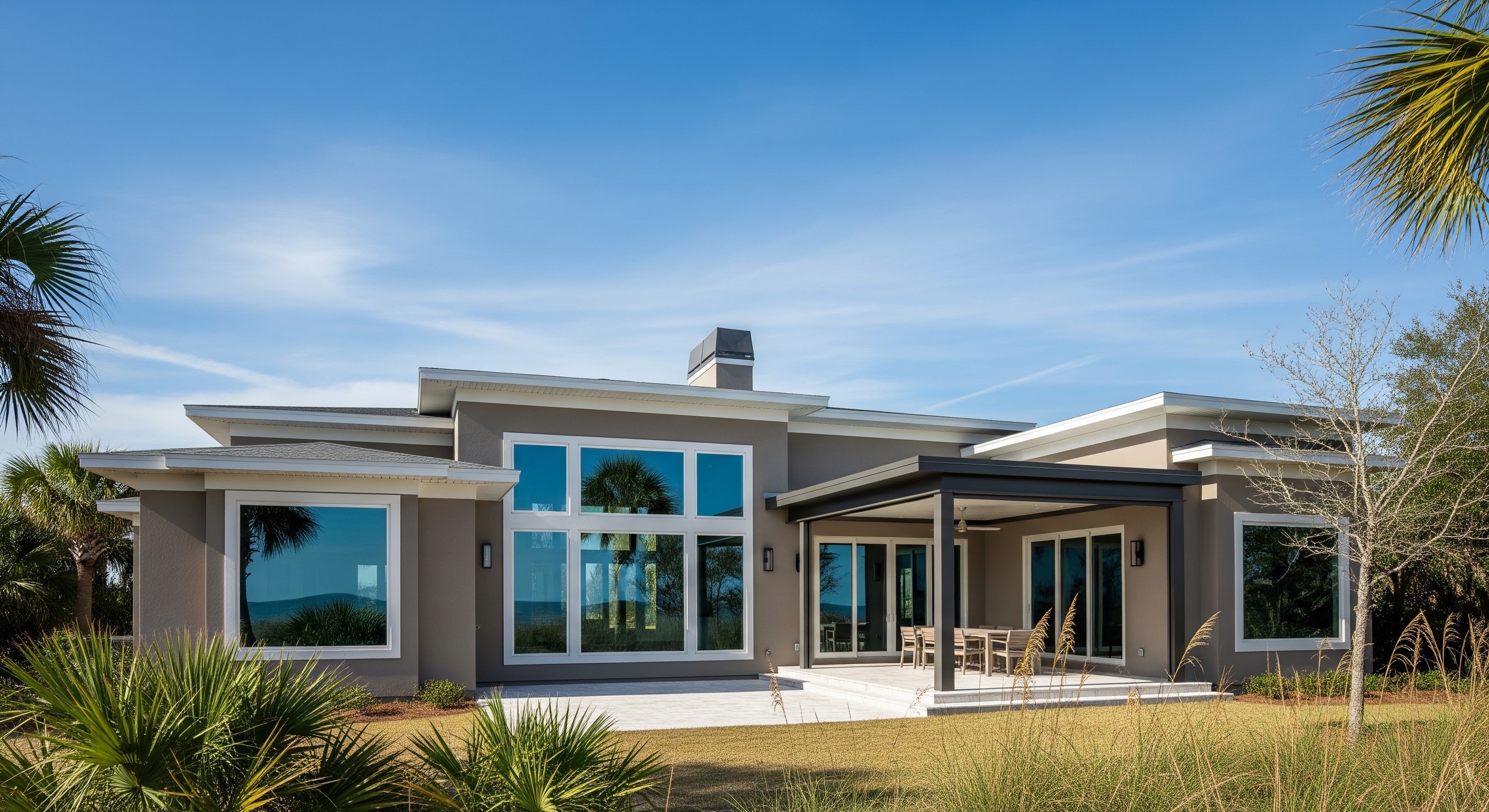
Why Aluminum Grade Matters More for a Patio Structure Near the Florida Coast
Why Aluminum Grade Matters More for a Patio Structure Near the Florida Coast
The previous post in this series compared fixed covers, pergolas, and screened structures, and noted that all three are typically built from aluminum in this region. This post looks at why that material choice matters more here than it would somewhere inland, and what actually happens to metal that isn't treated for the job.
This is the fourth post in Built for Both Seasons, following the previous post on what winterizing actually means here.
What coastal humidity and salt exposure actually do to untreated metal
Corrosion is an electrochemical process that speeds up dramatically in the presence of moisture and dissolved salts. Coastal air carries fine salt particles well beyond the immediate waterfront, meaning even homes several miles inland experience faster metal degradation than a comparable structure in a dry, low-salinity climate. Untreated steel rusts visibly within a season or two in this kind of environment. Even aluminum, which forms a natural oxide layer that offers some inherent resistance, can pit and degrade over time if that oxide layer is disrupted or if the specific aluminum alloy wasn't chosen for corrosion resistance in the first place.
What powder coating changes mechanically
Powder coating applies a durable polymer finish that acts as a physical barrier between the aluminum substrate and the surrounding air and moisture. Unlike liquid paint, powder coating is electrostatically applied and then cured under heat, producing a thicker, more uniform, and more impact-resistant finish that adheres more strongly to the metal underneath. This matters specifically in a coastal environment because the coating is the first line of defense against the salt and humidity discussed above. A thin, inconsistent, or poorly cured coating fails faster, exposing the aluminum underneath to the exact conditions the coating was supposed to prevent, and once that exposure starts, corrosion can progress even on a material that would otherwise have held up well.
Where fabric UV protection intersects with the structure itself
A patio structure paired with a retractable screen faces a second material question beyond the aluminum frame: the fabric itself. OmegaTex screen fabric, the material used in Titan's MaxForce and One-Track systems, blocks 91 percent of UV radiation, a Fenetex manufacturer specification. UV exposure degrades most synthetic fabrics over time, causing fading, brittleness, and eventual failure, so a fabric's UV resistance is a real durability factor alongside the aluminum frame's corrosion resistance, not a separate, unrelated consideration. Both the frame and any fabric attached to it are answering the same underlying question: how well does this material hold up to years of Florida sun, humidity, and salt air, not just how it looks on installation day.
Two patio structures can look identical on installation day. Only one of them was actually built for what the coast does to metal over the next ten years.
One boundary worth stating directly: this post describes how aluminum, powder coating, and UV-resistant fabric generally perform in a coastal environment, based on established material science and manufacturer specifications. It is not a claim that every aluminum product or coating on the market performs identically, since alloy composition, coating thickness, and application quality all vary between manufacturers and even between individual production runs.
Sources
Powder coating and aluminum corrosion resistance are described according to established material science principles. UV block figure for OmegaTex fabric is a Fenetex manufacturer specification, cited by Titan Shutters and Screens' product pages.
